Best Coffee Shop in Pagudpud - Enjoy the Best Philippine Grown Coffee at Tartaruga's
Looking for the best coffee shop in Pagudpud? At Tartaruga's Restaurant and Hotel, we serve premium Philippine coffees made from carefully selected gourmet beans and prepared by trained baristas using our professional Rancilio espresso machine. Whether you're starting your day with breakfast, taking a break from exploring Pagudpud, or simply enjoying a freshly brewed cup while overlooking the beauty of Northern Luzon, Tartaruga's offers a coffee experience that combines quality, flavour, and genuine Ilocano hospitality.
At Tartaruga's Hotel, we believe that anything less than gourmet coffee beans simply isn't good enough. That's why we're proud to offer what many guests consider the best coffee in Pagudpud, serving visitors a carefully selected range of premium Philippine coffees that showcase the rich flavours and character of locally grown beans.
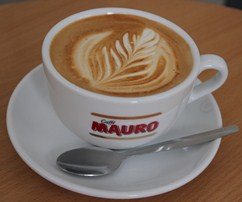
Unlike many chain coffee shops, we offer unique Philippine coffees that you may not find elsewhere, giving coffee lovers the opportunity to discover something truly special. Why not make your visit a coffee holiday and explore the incredible diversity of Philippine coffee while relaxing in beautiful Pagudpud? Every cup is brewed using our professional Rancilio espresso machine, and our staff have all received barista training, ensuring consistently excellent coffee whether you prefer an espresso, cappuccino, latte, or a freshly brewed cup of gourmet Philippine coffee.
Best Coffee Shop in Pagudpud
Coffee has long been woven into the fabric of Filipino culture and daily life. Far from being a recent trend inspired by the global coffee boom, the Philippines has enjoyed a rich coffee heritage stretching back more than two centuries. Coffee cultivation began during the Spanish colonial period when coffee plants were introduced and established in the country's fertile highland regions, many of which possess the ideal climate, altitude, and soil conditions for producing exceptional coffee.
The story of Philippine coffee begins in Lipa, Batangas, widely regarded as the birthplace of the country's coffee industry. According to local history, a Franciscan friar brought coffee and cocoa beans to the area in 1714 and planted them within the grounds of a monastery. Coffee flourished in the region, transforming Lipa into a prosperous centre of trade and agriculture. Its success was so remarkable that in 1887 Queen Isabella II of Spain elevated the town to city status, bestowing upon it the title of Villa de Lipa.
What many coffee lovers around the world do not realise is that the Philippines was once among the world's leading coffee producers during the nineteenth century. For a time, Philippine coffee was exported internationally and enjoyed a reputation for quality and abundance. Sadly, this success came to an abrupt end when coffee rust disease devastated plantations in the late 1800s. Production collapsed, and coffee-growing nations in Latin America rose to dominate the global coffee market, followed by many other coffee-producing regions around the world.
Today, however, the story is coming full circle. A new generation of farmers, growers, roasters, and coffee enthusiasts is helping revive this proud tradition. From the mountains of Luzon to the farms of Mindanao, Philippine coffee is once again earning recognition for its unique character, exceptional quality, and fascinating history. The Philippines may have been one of coffee's forgotten pioneers, but its coffee renaissance is well underway, and the future has never looked brighter.
Best Coffee Shop in Pagudpud - About the Beans
The Philippines is blessed with ideal coffee-growing conditions, and many of the country's most productive coffee plantations are located in its mountainous and highland regions. Today, one of the largest coffee-producing provinces is Sultan Kudarat in Mindanao, while other important coffee-growing areas include Amadeo, Tagaytay, and Silang in Cavite Province. Renowned coffee regions can also be found in Batangas, Benguet, Bukidnon, Kalinga, Davao, Misamis Oriental, and Claveria, which is located in Northern Luzon not far from Pagudpud.
The country grows four recognised coffee species: Robusta, Arabica, Excelsa, and Liberica, making the Philippines one of the few coffee-producing nations in the world to cultivate all four commercially. Arabica, prized for its smoother flavour and aromatic qualities, is generally grown at higher elevations. The cool mountain climate around Baguio and throughout the Cordillera region, at elevations reaching 1,500 metres above sea level and beyond, provides ideal conditions for producing high-quality Arabica beans.
Coffee production is spread across 23 coffee-growing regions throughout the Philippines. Northern Luzon is particularly well known for Arabica production and includes Benguet, the Cordillera Mountains, Mountain Province, Ifugao, Kalinga, and Bontoc. Central and Southern Luzon are major Robusta-growing areas, stretching from Doña Remedios Trinidad in Bulacan across to Bataan and south through Cavite and the Bicol Region. Together, these growing regions produce a remarkable diversity of coffees, each reflecting its local climate, altitude, and soil conditions.
Perhaps the most famous of all Philippine coffees is Barako Coffee, the legendary coffee of Batangas. The term "Barako" is commonly associated with coffee grown in the Batangas region from Liberica beans, a species that remains relatively rare in the global coffee industry. While most of the world's coffee production is dominated by Arabica and Robusta, Liberica accounts for only a small percentage of world production and is cultivated in relatively few countries. The first Barako coffee trees are believed to have originated from seedlings brought from Brazil and planted in Batangas during the nineteenth century.
Barako coffee has developed an almost legendary reputation among Filipino coffee lovers. It is celebrated for its bold character, powerful flavour, and distinctive aroma. Rich, full-bodied, and unmistakably robust, Barako offers a coffee experience unlike any other. For visitors exploring Philippine coffee for the first time, it is often considered an essential tasting experience and a perfect introduction to the country's proud coffee-growing heritage.
Best Coffee Shop in Pagudpud
The Philippines is also home to one of the world's rarest and most exclusive coffees, Kopi Luwak, often known as Civet Coffee. Produced using a unique natural process involving the Asian palm civet, these beans are carefully collected, cleaned, and roasted to create a coffee renowned for its exceptionally smooth flavour, low bitterness, and remarkable complexity. Sought after by coffee enthusiasts around the world, Kopi Luwak is often considered a once-in-a-lifetime tasting experience and ranks among the most expensive coffees available anywhere. At Tartaruga's, we are passionate about introducing guests to the finest coffees the Philippines has to offer, and we hope to soon add this rare and fascinating coffee to our menu, giving visitors the opportunity to experience one of the world's most celebrated and talked-about brews.
Best Coffee Shop in Pagudpud - Great Coffee Suppliers
We are passionate about serving genuinely great coffee. While there are plenty of places to buy coffee, truly exceptional coffee is much harder to find. To ensure every cup meets our standards, we invested in a professional Italian espresso machine and trained all of our staff in the fundamentals of quality barista techniques. We have also gone the extra mile to source specialist coffee beans, equipment, and brewing accessories, including products that are often difficult to obtain locally. The result is coffee that is rich, consistent, and expertly prepared, giving our guests a coffee experience that rivals many dedicated cafés and proving that great coffee deserves the same attention to detail as great food.
Every good hotel, restaurant and coffee shop has reliable and good gourmet coffee beans suppliers. We serve only the best Philippines coffee beans using good coffee making equipment and well trained barista's.