The Bangui Windmills Ilocos Norte
The Bangui Windmills Ilocos Norte create one of northern Luzon’s most recognisable coastal scenes, a line of white wind turbines following the curve of Bangui Bay, with the sea stretching beyond them. Located in Bangui, Ilocos Norte, close to neighbouring Pagudpud, this working wind farm combines an appealing sightseeing stop with a significant chapter in Philippine renewable energy history. The shoreline arrangement gives visitors an opportunity to appreciate both the turbines’ scale and the landscape around them.
Include the Bangui Windmills in your Pagudpud holiday for coastal photographs, a closer look at wind power and an outing through the neighbouring towns of Ilocos Norte. You can visit as a dedicated excursion or combine Bangui with attractions in Burgos. Allow time to enjoy the shore, browse any open souvenir stalls and take photographs from permitted visitor areas. The experience offers something for landscape photographers, families and anyone curious about how wind becomes electricity.
Where Are the
Bangui Windmills Ilocos Norte?
The Bangui Windmills stand along Bangui Bay in the municipality of Bangui, Ilocos Norte. Although frequently included in Pagudpud sightseeing itineraries, they are in a separate neighbouring municipality. The familiar beachfront turbines belong to the NorthWind wind farm, which began commercial operations in 2005.
If you are staying in Pagudpud, ask your accommodation or driver about an excursion south to Bangui. Specify that you want to visit the beachfront windmills, particularly if your itinerary also includes other wind farms. There are several wind energy developments in this part of Ilocos Norte, and agreeing on the actual stopping places helps everyone plan the day.
Bangui Windmills -
A Pioneering Wind Farm
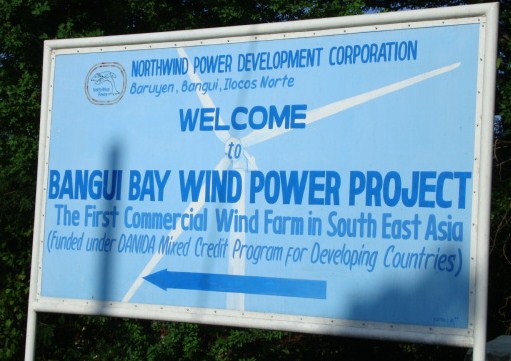
Bangui’s significance extends beyond its photographic appeal. NorthWind was the Philippines’ first commercial wind farm and is recognised by its developer as Southeast Asia’s first on-grid wind farm. Its opening demonstrated that commercial wind generation could become part of the country’s electricity supply.
Commercial operations began in June 2005 with fifteen turbines. Five more were added in 2008, bringing the original two phases to twenty turbines with a combined installed capacity of 33 megawatts. This is the coastal array that appears in many photographs and older travel descriptions of the Bangui Windmills. Many of the engineers and technicians building the windfarm chose to stay at Tartaruga’s Hotel in Pagupud.
Understanding the
Turbine Numbers
Different figures appear in descriptions of Bangui because the NorthWind project expanded over time. The original twenty Vestas turbines each have a rated capacity of 1.65 megawatts. A third phase added six Siemens turbines in 2014, increasing the wider project’s capacity to approximately 52 megawatts. The original beachfront array and the expanded project therefore account for the commonly quoted figures of twenty and twenty-six turbines.
For a visitor, the important distinction is straightforward: the well-known coastal row represents the first two phases, while the NorthWind development includes later expansion. Understanding that history makes the differing descriptions easier to follow and adds context when you look along the bay.
The Bangui Windmills wind farm is recognized as the largest in Southeast Asia and sells power Ilocos Norte Electric Cooperative (INEC). The expected life span of the wind generation equipment is 21 years.
The Northwind Bangui Bay Project estimates that 56,788 tons of CO2 (tons of carbon dioxide equivalent) of greenhouse gases will be reduced per year for the duration of the project activity. That’s 1.2 million tons of CO2!
This gives Ilocos Norte when combined with hydro-electric power generation, one of the lowest carbon emission footprints in Asia and certainly within developed or developing countries.
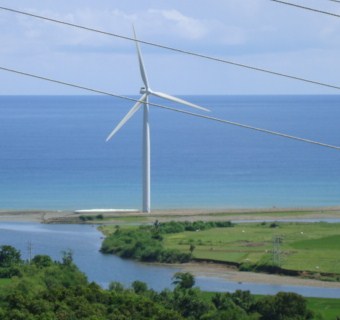
The Bangui windmills towers are an impressive 60 meters high and are located just 10 meters from the sea edge. Each wind turbine is capable of producing electricity up to a maximum capacity of 1.65MW. Believe it or not the latest generation turbines can produce up to 14 MW.
Collectively, the wind farm generates around 33 megawatts of electricity, supplying nearly 40% of Ilocos Norte’s power needs. This contribution significantly reduces the region’s reliance on fossil fuels and positions Ilocos Norte as one of the lowest carbon-emitting provinces in Asia.
Why Bangui Bay?
A wind farm needs a suitable wind resource, space for turbines and a connection through which electricity can reach consumers. Bangui’s coastal setting provided an opportunity to develop wind generation beside the bay. The first two phases were arranged along approximately nine kilometres of shoreline, following the coast’s broad curve.
That layout also creates the attraction visitors enjoy today. From an appropriate position, successive turbines appear to recede into the distance, giving a clear impression of their repetition and scale. The same coastline that supports the development provides its visual setting, with sand, sea and changing skies forming the background.
How Wind Becomes
Electricity
The structures commonly called windmills here are electricity-generating wind turbines. Moving air creates lift on the blades, turning the rotor. The turbine’s machinery converts that rotation into electrical energy, which is collected and supplied through the electrical network.
The blades do not need to turn at an obviously rapid speed to generate power. Their size allows them to capture energy across a large swept area. If you visit with children, watching the rotor is a useful starting point for explaining renewable energy: the movement they can see is the beginning of a process that produces electricity. Their hypnotic rotation and rhythmic hum serve as a gentle reminder of the power of nature and humanity’s ability to harness it responsibly.
Bangui Windmills A
Working Energy Site
The Bangui Windmills remain part of an operating power development. In August 2026, ACEN announced completion of a maintenance and repair programme for NorthWind, intended to improve reliability and extend the useful life of the existing equipment. The work illustrates the continuing maintenance required to keep renewable energy infrastructure operating.
A turbine that is stationary during your visit does not necessarily indicate a fault. Turbines may stop because of wind conditions, operational controls or maintenance. Enjoy the view from permitted areas and follow signs around equipment and access roads. A sightseeing visit does not provide access to turbine interiors or operational facilities.
Bangui Windmills Ilocos Norte - The Coastal
Experience
The appeal of Bangui comes partly from seeing the turbines within an open shoreline setting. Looking along the beach gives a different impression from seeing them in a photograph: the spacing becomes clearer, and the surrounding landscape helps reveal their size. Tourism listings identify the bay’s beach and turbine row as the central visitor attraction.
Take time to appreciate the view before concentrating on photographs. Watch the changing light across the water and compare the appearance of nearby turbines with those further along the shore. Treat the visit primarily as coastal sightseeing, and follow local advice about the shoreline and sea conditions.
For travelers, the Bangui Windmills offer a unique blend of natural beauty and technological wonder. Whether you’re capturing the perfect photo, enjoying a horseback ride along the beach, or sipping coffee at the Kang Kang Café, the experience is both relaxing and enlightening.
The windmills are easily accessible from nearby towns like Pagudpud and Laoag, making them a convenient stop on any Ilocos Norte itinerary. Their hypnotic rotation and rhythmic hum serve as a gentle reminder of the power of nature—and humanity’s ability to harness it responsibly.
Bangui Windmills Ilocos Norte
Getting to Bangui
Windmills from Pagudpud
Bangui is commonly included in what local travel guides call the Pagudpud “South Tour,” alongside attractions in Burgos. This gives visitors a practical way to see the windmills without organising a separate transfer for every stop. Available transport arrangements may include a private vehicle or a locally arranged sightseeing trip.
Agree on the route, fare, waiting time and return arrangements before leaving. If your trip crosses municipal boundaries, ask the organiser to explain any vehicle transfers or additional arrangements.
Bangui Windmills
Nearby Attractions
A Bangui excursion can be combined with Kapurpurawan Rock Formation and Cape Bojeador Lighthouse in Burgos. Travel guides commonly group these attractions with the windmills because they suit a sightseeing route through the neighbouring municipalities. Burgos also has its own wind farm, which is separate from NorthWind’s Bangui development.
Choose your stops according to your interests and available time. Photography enthusiasts may prefer longer at the coast, while families may want a more varied day with shorter visits. Leave sufficient time between attractions rather than planning around the assumption that each stop requires only a few minutes.
All About the Bangui Windmills Ilocos Norte
The Bangui Windmills combine coastal views with the history of pioneering commercial wind power in the Philippines. Visit from Pagudpud for photographs, a closer appreciation of renewable energy and a journey along Bangui Bay. Include nearby Burgos attractions if time permits, while allowing space to enjoy the windmills themselves. Bangui Windmills for all you need to know.