Things to Do in Pasuquin Ilocos Norte
Pasuquin Ilocos Norte gives visitors a taste of Ilocos Norte through products closely associated with the town, salt and biscocho. And of course garlic, onions and rice. On the journey north from Laoag towards Pagudpud, it offers an opportunity to pause, discover local food traditions and learn about livelihoods connected with the coast. The provincial tourism inventory recognises both Pasuquin’s salt-making industry and Pasuquin Bakery’s biscocho as attractions within its food and cottage-industry tourism offering.
Include Pasuquin in your holiday for a bakery stop, an arranged introduction to salt making or a visit to its coastal heritage. You can explore selected places while travelling to Pagudpud, or allow more time during an excursion south from your accommodation. Its appeal comes from discovering how familiar ingredients and everyday products connect with local history, family businesses and the landscape around the town.
Where is Pasuquin Ilocos Norte?
Pasuquin is a coastal municipality in Ilocos Norte, north of Bacarra and Laoag and south of Burgos. Travellers following the main road towards Pagudpud pass through the municipality, making it a convenient destination to consider when organising transfers or sightseeing along the province’s western coast. Decide what you want to experience before arranging your stop. Buying bread requires different timing from visiting a salt producer or exploring a coastal landmark. Tell your driver which places interest you and allow time for any turn-offs, local enquiries and walking involved. A planned stop is more rewarding than trying to fit everything into an unexpected roadside break.
The History of
Pasuquin Ilocos Norte
Pasuquin Ilocos Norte started as an Augustinian missionary beginning in 1599. The community’s religious administration was initially connected with Bacarra, before Pasuquin became an independent parish in 1784. These connections help explain the Pasuquin visitors encounter today. Food products are part of a longer story of farming, coastal work and trade. Taking an interest in that background gives a bakery purchase or a bag of salt more meaning than a simple souvenir collected on the road.
Why Is It Called
Pasuquin?
One explanation of the name links Pasuquin with smoke from salt production. The municipal history suggests that cooking brine created a smoky place described as “paasokan,” from which the name Pasuquin developed. It is an appropriate story to learn while exploring the town’s salt-making tradition. The connection brings together language, work and landscape, showing how a livelihood can become part of a community’s identity. Ask a local guide or producer how the name is explained locally and enjoy the account as part of Pasuquin’s heritage.
Traditional Salt
Making in Pasuquin
Salt is central to Pasuquin’s reputation. Salt making is a cottage industry that has provided livelihoods for many local families. An arranged visit can introduce the work behind an ingredient that is easy to take for granted. Rather than simply purchasing a bag, ask how the salt is produced, which stages are taking place and how the finished product is used. The answers can turn a short stop into an engaging introduction to local food production.
What Makes
Pasuquin Salt Special?
Pasuquin’s traditional salt is distinguished by its sand-based production method and hand processing. Salt makers repeatedly wet prepared coastal sand with seawater and allow it to dry, concentrating salt in the sand. They then filter seawater through this salt-laden material to collect concentrated brine, which is boiled in large vats until crystals form. The salt is gathered and drained before packing. This labour-intensive process produces the fine white crystals associated with Pasuquin and preserves skills passed between generations.
Watching the Salt
Making Process
To make sea salt the local and clean sea water is pumped to a holding tank and held there for several hours. When the various sediments and impurities have settled the sea water is transferred to concrete evaporating pans.
The sea water filled pans are then heated by ovens directly underneath the pans. They used to use wood to do this but that’s now banned and they have resourcefully turned to rice by products such as dried husks, leaves and stalks.
The ovens heat the water overnight until only the pure white salt is left. The sea salt is then sprayed with iodine (required by law) and then prepared for sale.
The production method involves several stages, and what you can observe will depend on the producer and the work underway during your visit. Arrange permission before entering a working area. Give producers space around hot equipment, fuel and containers, and supervise children closely. Ask before taking photographs, particularly when someone is concentrating on a task. A respectful visit allows you to learn while the people hosting you continue their work.
Buying Pasuquin
Salt
Salt can make a useful purchase for visitors interested in cooking. Ask the seller about its texture, intended use and packaging rather than assuming every product is identical. You may find that discussing how it is made and used provides helpful context for choosing what to take home.
Stop and Try the Roadside Grilled
Fish and Squid
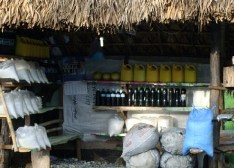
A drive through Pasuquin offers an opportunity to stop at the roadside ihawan, or grill stalls, known for fish and seafood. Offerings include dumadara, locally identified as mackerel tuna, blue marlin, catfish (hito) and the particularly popular grilled squid (pusit). Local grill-house menus also list milkfish (bangus), pompano and tuna, although selection varies with the establishment and available supply. Choose from the displayed seafood, confirm the price and enjoy it freshly grilled with rice and a dipping sauce such as vinegar, calamansi or soy sauce. It makes a satisfying food stop on the journey between Laoag and Pagudpud.
Also you can buy a very good sugar cane vinegar and it’s like a young balsamic vinegar, and great for marinating fish or salads. You can also buy a bottle of basi which is a potent wine that is just short of turning into sugar cane vinegar, has a very strong kick that sort of sneaks up on you.
Taste Pasuquin
Biscocho
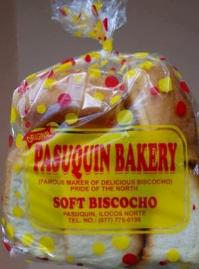
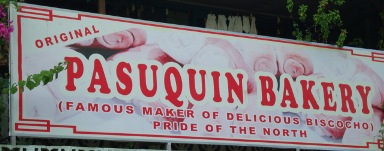
This is my regular stop and a another reason to visit Pasuquin. Pasuquin Bakery’s biscocho in both soft, freshly baked and crisp forms. Trying the different textures is part of the enjoyment, particularly if you are familiar only with the toasted biscuits sold elsewhere under the same name. I love the bread here.
Ask which varieties are available when you arrive. A small purchase to eat during the day and a separately packed selection for later can suit travellers continuing towards Pagudpud. .
A Local Bread
Tradition
Pasuquin’s biscocho has attracted attention from food and travel writers for its distinctive character. It is bestd escribed as a crisp version with a hint of anise. These differences make it worth asking about the actual product rather than relying on the name alone. Take time to enjoy it as part of your visit. Bread bought locally can become a straightforward breakfast or afternoon snack during your stay.
Try the Biscocho in Pasuquin Ilocos Norte
Most biscocho which is made with stale leftover bread, however local biscocho is made using freshly baked bread, and specifically made to be toasted. Unlike the normal biscocho, this biscocho is not sweet. It is rather unique and is flavored with anise.
It is said that the recipe came from a now deceased town man known as Timot Josue, who was reputedly trained in a Spanish style panaderias in colonial Manila. He then formulated the recipe and started his own bakery, and it remains a family tradition.
The fact is that practically every bus, jeepney and private vehicle makes a stop at the Bakery, to buy biscocho. The freshly baked soft bread is perfect match with cheese, or condensed milk, or with Spanish style sardines (my favorite).
Try the Biscocho in Pasuquin
Most biscocho which is made with stale leftover bread, however local biscocho is made using freshly baked bread, and specifically made to be toasted. Unlike the normal biscocho, this biscocho is not sweet. It is rather unique and is flavored with anise.
It is said that the recipe came from a now deceased town man known as Timot Josue, who was reputedly trained in a Spanish style panaderias in colonial Manila. He then formulated the recipe and started his own bakery, and it remains a family tradition.
The fact is that practically every bus, jeepney and private vehicle makes a stop at the Bakery, to buy biscocho. The freshly baked soft bread is perfect match with cheese, or condensed milk, or with Spanish style sardines (my favorite).
Pasuquin - Other Attractions
Pasuquin also has a surviving coastal watchtower associated with Puyupuyan. And it is known as Pasuquin Old Spanish Watchtower. It offers a heritage interest beyond the town’s better-known food products.
The area is also noted for Bonsai production with some very creative artists working with this.
You can visit Naglicuan which is the location of the Botanic Garden.
In Puyupuyan it is renowned for a grotto where an apparition was reported in the late 1980’s and early 1990’s.
In nearby San Juan are some great falls known as Calitungan Falls, and in Surong they have the Luttuong Falls (best in the rainy season).
In nearby Sapat is an air base for the Philippines Air Force
Pasuquin Ilocos Norte
Pasuquin adds traditional salt making, distinctive biscocho and coastal heritage to a Pagudpud holiday. Plan a bakery stop, enquire about an arranged producer visit and explore suitable local sights. Allowing time to learn about the town’s products and history makes the journey through Ilocos Norte more rewarding. Pasuquin Ilocos Norte for all you need to know.