Visit Bantay Abot Cave Pagudpud
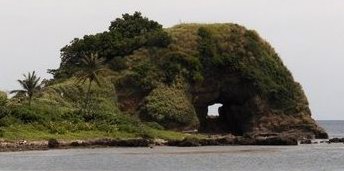
Bantay Abot Cave Pagudpud offers one of Pagudpud’s most distinctive coastal views: an opening through a rocky, vegetation-covered formation beside the sea. Located in Sitio Gaoa, Barangay Balaoi, it brings together rock, shoreline and open water in a setting that attracts visitors exploring the route towards Blue Lagoon. The arch is the feature that captures attention, creating a natural frame through which to appreciate the surrounding coast.
The naturally sculpted hole was steadily eroded by waves until it was wrecked by an earthquake during the 1980’s. It’s sort of like a giant donut! The waves continue to wash through and shape the hole. It is also sometimes called the underground sea, as the top of the cave is covered by lush green vegetation. Inside the cave is a church, and once inside you hear the muffled echo of waves breaking and also the birds singing as swallows also inhabit the cave.
Include Bantay Abot Cave in your Pagudpud holiday for coastal photographs, local folklore and a closer look at the landscape beyond the beaches. It combines naturally with nearby Timmangtang Rock and a visit to Blue Lagoon, allowing several different experiences within one excursion. Plan around the weather and shoreline conditions, wear suitable footwear and leave enough time to enjoy the formation from the viewing areas that are accessible during your visit.
Where Is Bantay
Abot Cave Pagudpud?
Bantay Abot Cave Pagudpud is on the coast of Barangay Balaoi in Pagudpud, Ilocos Norte. The municipal website places it in Sitio Gaoa, while mapping identifies the nearby viewpoint along Balaoi–Aryargo Road. Its position makes it a familiar stop for visitors travelling through this part of the municipality.
When arranging transport, explain that you want time to view the formation rather than simply pass the area. Ask your driver where parking and visitor access are currently permitted. If members of your group prefer to avoid uneven ground, mention that beforehand so the outing can include suitable viewing opportunities without assuming everyone will walk to the opening.
What Does the Name
Bantay Abot Cave Mean?
The name describes the attraction. In Ilocano, bantay means mountain and abot means hole, giving the familiar translation “mountain with a hole.” Seeing the opening makes the meaning immediately understandable and provides a connection between the landmark’s appearance and its local name.
You may encounter the name written as Bantay Abot, Bantay-Abot or Bantay Abot Caves. These variations appear in tourism descriptions of the same attraction. For your visit, the recognisable feature is the large opening in the coastal rock formation, which gives the site its identity and makes it an appealing subject for photographs.
Bantay Abot Cave - A
Natural Rock Arch
Although known as a cave, Bantay Abot’s main visitor feature is an open rock arch rather than an extensive underground cave system. Daylight passes through the opening, and the surrounding shore remains an essential part of the experience. Understanding that layout helps visitors arrive with an accurate picture of what they will see.
Its appeal lies in the combination of solid rock and open space. From one position, the formation dominates the view; from another, the opening draws attention towards the water beyond. Take time to appreciate both perspectives where access permits. The contrast between vegetation above and exposed rock below adds further interest.
The Bantay Abot
Cave Formation’s Story
The naturally sculpted hole was steadily eroded by waves over time until it was wrecked by an earthquake during the 1980’s. It’s sort of like a giant donut! The waves continue to wash through and shape the hole. It is also sometimes called the underground sea, as the top of the cave is covered by lush green vegetation. Inside the cave is a church, and once inside you hear the muffled echo of waves breaking and also the birds singing as swallows also inhabit the cave. The sea shore around the Bantay Abot cave is white sand and shells. It’s a great place to just sit and meditate or be close to the sea.
Bantay Abot Cave - The
Lover’s Rock Legend
Bantay Abot is also connected with nearby Timmangtang Rock through local folklore. The formations are traditionally described as lovers, with Bantay Abot representing the female and Timmangtang the male. Together they are referred to as “Lover’s Rock,” adding a cultural story to a visit focused on natural scenery.
Reaching the
Opening of Bantay Abot Cave
Part of the access is descending steps from the roadside area and continuing across uneven shoreline rocks towards the arch. Depending on conditions, reaching the opening can involve more careful movement than the view from the road might suggest. Check the current route locally and assess it before continuing. Wear footwear that stays securely on your feet and offers grip on irregular surfaces. Keep your hands available while walking, and put cameras away when negotiating awkward ground. Visitors who find the approach unsuitable can still appreciate the formation from an appropriate alternative viewing position.
Bantay Abot Cave Tides
and Sea Conditions
The shoreline setting means that access depends on more than whether the weather is sunny. Tide height, incoming waves and wet rock surfaces can affect the approach. Ask your guide or local contact about conditions on the day, and follow any signs or instructions restricting access. Do not assume that low tide alone makes the route suitable. Watch the sea before moving closer and keep a clear route back. If waves are reaching the approach or conditions are deteriorating, enjoy the view from further away.
Bantay Abot Cave Pagudpud
Bantay Abot Cave combines a natural coastal arch, a descriptive Ilocano name and the Lover’s Rock legend linking it with Timmangtang. Visit for photographs and shoreline scenery, checking access and sea conditions before approaching the opening. Pair it with nearby attractions for a varied day exploring Pagudpud. Bantay Abot Cave Pagudpud for all you need to know.