Bacarra Ilocos Norte
Bacarra Ilocos Norte brings history, architecture and local culture into a journey through Ilocos Norte. Situated north of Laoag on the route towards Pagudpud, the town is known for its domeless bell tower, Saint Andrew the Apostle Church and heritage buildings around the centre. For visitors heading to the beaches, it offers a rewarding opportunity to pause and discover a community whose landmarks reveal several centuries of local history.
Plan time to explore the church precinct, visit Museo de Bacarra when open and follow the town’s heritage interpretation. You can make Bacarra a stop during your transfer to Pagudpud or arrange a more leisurely excursion with time for photographs and a meal. Its appeal comes from seeing individual landmarks together: the church, tower, museum and surrounding streets help explain how religious, civic and everyday life developed alongside one another.
Where Is Bacarra Ilocos Norte?
Bacarra is a municipality in Ilocos Norte, immediately north of Laoag along the main route towards Pasuquin, Burgos, Bangui and Pagudpud. Its position makes it convenient to consider when planning a journey between Laoag and a Tartaruga’s hotel in Pagupud, especially if you want to include heritage sightseeing along the way. Decide beforehand whether you want a brief stop or a longer visit. Looking at the bell tower takes less time than exploring the museum and town centre. Tell your driver which places interest you and allow for parking, walking and opening arrangements rather than treating Bacarra as a photograph taken through the vehicle window.
Bacarra - Centuries of
History
Bacarra’s recorded colonial history reaches back to the late sixteenth century. Museo Ilocos Norte dates its establishment as an Augustinian mission to 1590 and identifies 1778 as a later municipal milestone. Different local accounts give slightly different early dates, but they consistently place Bacarra among the province’s long-established historic communities. That history becomes more meaningful when you look at the town’s arrangement. The church precinct and civic centre provide a starting point for understanding how the settlement developed
The Story Behind
the Bacarra Name
Local tradition connects the name Bacarra with a freshwater fish called bac-bacarra. One version tells of a Spanish newcomer asking a fisherman the name of the place. Misunderstanding the question, the fisherman replied with the name of his catch, and the answer became associated with the settlement. The fish also features in explanations of the Bac-Bacarra Festival, linking the town’s identity with its waterways and fishing heritage. Knowing the story adds interest to the name you see on signs and local tourism material. Ask a guide or museum representative how the tradition is interpreted within the community.
Saint Andrew the
Apostle Church
Saint Andrew the Apostle Parish Church is one of Bacarra’s principal landmarks. The Church of Bacarra is a National Cultural Treasure. This formal recognition establishes its importance within the Philippines’ cultural heritage.
The Church was constructed by the Spanish Augustinian Friars in 1593. It was destroyed by a 7.8 magnitude earthquake on August 1983 and reconstructed. The image of the patron saint, San Andres stands in front of his x-shaped cross in the central niche.
Begin by appreciating the church and its architectural beauty from outside, then enter if it is open and visitors are always welcome. Remember that it remains a place of worship. Dress respectfully, keep conversation quiet and give priority to services and people praying.
The Bacarra Domeless
Bell Tower
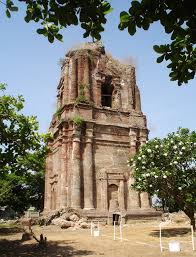
The Bacarra Bell Tower with the unusual elongated cupola was built during the 1830’s and is located at the right hand side of the Roman Catholic Church. It was built in 1830’s and made up of coral blocks and stucco with an original height of fifty meters and a five meter-thick wall. An earthquake destroyed it in 1931, and this caused the top most portions to tilt a little sideward on the right. It was once called the Leaning Tower of Bacarra!
The Baccara tower was built away from the church similar to other churches in the region, to reduce the damage in case the tower comes crashing down in another major earthquake. This proved to be the case as the dome finally crumbled during the last big earthquake and you can still see the pile of grass-covered brick debris strewn around the side of the Bacarra Tower.
Museo de Bacarra
Museo de Bacarra offers an opportunity to place the town’s monuments within a broader local story. It is a cultural and lifestyle museum concerned with Bacarra’s historical, religious, cultural and economic life. It complements a visit to the church and bell tower by directing attention towards the community around them. Allow time to read the interpretation and ask questions when staff are available. Museum displays can make the surrounding streets more interesting by explaining objects, customs and experiences that are not apparent from building exteriors. Confirm current opening hours, admission arrangements and photography rules before making the museum the focus of your stop.
Follow the Bacarra
Heritage Trail
Bacarra launched a heritage trail in 2022, introducing eight historical markers to help present its cultural assets. This includes the plaza complex, Gabaldon School, La Peralta Residencia, Museo de Bacarra and the church and belfry among the heritage places associated with the town centre. Ask locally for the current route or an explanation of the markers. Wear comfortable shoes, carry water and choose a pace that leaves time to read rather than simply moving from one photograph to another.
Bacarra Streets
and Historic Buildings
The small town of Bacarra has some popular tourist attractions including St. Andrew Church, Lazo Ancestral Home, Ruins of Vijia Watchtower, Municipal Hall, Municipal Park, Libtong-Teppang Irrigation Tunnel, Plaza, Addo Velasco, Velasco Pacifico and many other places of historical importance. Museo Ilocos Norte highlights Bacarra’s surviving town layout and collection of historic buildings, including houses, school buildings and the municipal building. It encourages visitors to look beyond the bell tower and appreciate the wider built environment. The charming Bacarra town hall is located nearby with its Filipino-Spanish-Mexican architectural finishes and deep blue paint.
The Bacarra Natba
Watchtower
Visitors with additional time can enquire about the coastal watchtower at Natba, also called the Viquia Watchtower. Bacarra’s local government profile identifies it as a seventeenth-century structure used to watch the coast for pirate attacks. It introduces a maritime element to the town’s heritage beyond the church precinct.
Taste Local Food
in Bacarra Ilocos Norte
A meal gives you another way to experience the town. Have breakfast in Bacarra with Ilocano dishes such as poqui poqui, longganisa and dinengdeng. These provide useful dishes to ask about when exploring local menus, although availability will vary between establishments.
Bacarra Festivals
and Community Life
The Bac-Bacarra Festival celebrates local identity through cultural activities associated with the town’s heritage. Descriptions of the festival connect its name and dance presentations with the fish tradition and the community’s fishing history. Some of the Bacarra cultural attractions are the Farmer's Festival, Natba Beach and Delta Tourism and the "Sabet" on Easter Sunday.
Planning Your
Visit to Bacarra Ilocos Norte
Bacarra adds church heritage, a distinctive domeless bell tower, museum interpretation and historic streets to an Ilocos Norte holiday. Visit on your journey between Laoag and Pagudpud, allowing time to explore beyond the main monument. A well-planned stop reveals a town with several centuries of history and continuing community life. All about Bacarra Ilocos Norte and what you need to know.