What Is Ilocos Empanada
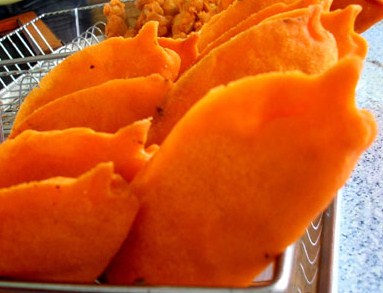
What is Ilocos empanada. The Filipino empanada comes in many forms, but the version served in Ilocos Norte is particularly distinctive. Its thin, crisp rice-flour shell encloses vegetables, local longganisa and egg, with the familiar orange colour coming from annatto, also called achuete or atsuete. In Batac, Laoag and other parts of the province, empanadas are cooked at roadside stalls, markets and food courts, providing a filling snack or meal throughout the day.
I love an empanada freshly lifted from the frying pan, served hot with sukang Iloko, the local sugarcane vinegar. What makes the experience interesting is the variation between towns and individual cooks. Batac, Laoag and Vigan each have their own empanada traditions, with differences in the crust, vegetables, sausage and egg filling. Trying more than one version is an enjoyable way to discover the food of the Ilocos region.
What Is an
Empanada?
An empanada is a filling enclosed in dough, usually folded into a half-moon shape and sealed before cooking. The name comes from the Spanish verb empanar, meaning to coat or enclose in bread. Empanadas reached the Philippines through Spanish colonial influence and developed into different local preparations. Across the country, they may be baked or fried, with wheat-flour pastry or a rice-based wrapper. Fillings can include chicken, pork, beef, vegetables and other ingredients.The rice-flour empanada of Ilocos is therefore one regional form of a much wider Filipino food tradition. Its ingredients and cooking method distinguish it from the thicker pastry empanadas found in many bakeries.
What is Ilocos Empanada?
The Ilocos empanada is
known for its thin shell and freshly cooked filling. Rice flour or galapong
forms the basis of the wrapper, which is flattened before the ingredients are
added. The filling commonly includes
grated green papaya, mung beans or mung bean sprouts, local longganisa and egg.
These ingredients are not identical at every stall: some cooks use cabbage,
while others offer versions without meat or egg. The filled wrapper is folded,
sealed and deep-fried. The finished empanada should have a crisp shell that
holds the ingredients together without becoming excessively thick or doughy.
What is Batac
Empanada?
Batac empanada is one of Ilocos Norte’s best-known foods. Its orange shell makes it immediately recognisable, while the combination of vegetables, garlicky sausage and egg gives it a substantial filling. Green papaya and mung beans or sprouts are commonly used, with longganisa and a whole egg added according to the version ordered. The egg is normally cracked into the filling before the wrapper is sealed; it cooks inside the empanada during frying. The Batac Riverside Empanadaan is a well-known place to try it. Here, visitors can watch vendors prepare the dough, assemble the filling and fry empanadas to order.
All About Gloria’s
Empanada
Glory’s Empanada, associated with Gloria Aduana Cocson, has played an important role in establishing Batac’s reputation for this food. Known locally as Manang Glory, she became widely recognised for her empanadas and received a Gameng Lifetime Achievement Award in 2008. People travelled to Batac specifically to try her cooking, helping turn a familiar local snack into an attraction for visitors. One account links the orange wrapper to Glory’s favourite colour, achieved by adding achuete. Other vendors also have their own histories of using the colouring, so the story is best understood as part of Batac’s empanada tradition rather than proof that one person invented every feature of the dish.
What is Laoag
Empanada?
Empanadas are also a familiar part of eating in Laoag City. Many resemble the Batac version, with an orange rice-flour shell, vegetables, longganisa and egg. Some Laoag vendors use cabbage instead of green papaya, while others use papaya or a combination of vegetables. Smaller versions may be called empanadita. The precise filling depends on the maker, and sweet longganisa is used by some vendors as an alternative to the more savoury local sausage. Cabbage-filled empanadas are part of Laoag’s food scene, but cabbage should not be treated as an ingredient found only in Laoag.
What is Vigan
Empanada?
The Vigan empanada, from Ilocos Sur, generally has a paler shell than the orange Batac version. Its crust is commonly described as thinner and particularly crisp. Vegetable fillings vary. Green papaya is used by some makers, while others use cabbage. Mung bean sprouts are more strongly associated with the Batac preparation. The sausage is another difference: Vigan empanadas commonly use Vigan longganisa. Some makers use only the egg yolk, while others include the whole egg. These are useful distinctions when comparing the two styles, but they are not fixed rules followed by every vendor.
Longganisa Makes a
Difference
The longganisa contributes much of the empanada’s flavour. Ilocos sausages are commonly savoury and garlicky, contrasting with the sweeter longganisa familiar in other parts of the Philippines. Local garlic is important to their character, while vinegar and other seasonings vary between producers. Even two empanadas made with the same vegetables and egg can taste different because of the sausage used. The longganisa is usually removed from its casing or broken into portions for the filling. It should complement the vegetables rather than overwhelm them.
Ordinary, Special
and Double Special Empanada’s
Empanada stalls often offer several versions. An ordinary empanada may contain vegetables and egg, while an eggless version leaves out the egg. A special empanada commonly adds longganisa. A double special may contain extra sausage, while other combinations include two eggs or additional fillings. These names help customers choose, but portions and definitions vary between stalls. The distinction is generally the quantity and combination of ingredients rather than a completely different cooking method.
How the Empanada
Is Made
Watching an experienced vendor prepare an empanada is part of the enjoyment. A portion of dough is flattened into a thin round, often using a sheet or liner to help handle it.
Prepared vegetables and longganisa are placed in the centre, followed by the egg when included. The wrapper is folded over the filling and the edges sealed carefully.
The empanada is then lowered into hot oil. Frying must cook the filling and set the egg while crisping the shell. The timing depends on its size, filling and oil temperature.
Empanada - Vinegar
and Serving
An Ilocos empanada is best enjoyed freshly cooked, once it has cooled enough to eat comfortably. The shell loses some of its crispness as it stands.
Sukang Iloko is the traditional accompaniment. Its sourness balances the fried shell and rich filling, and some diners add chilli. Others prefer ketchup. Vinegar differs between makers in acidity, seasoning and flavour. Those differences can change the taste of the meal just as much as the choice of longganisa.
Other Filipino
Empanadas
Beyond Ilocos, Filipino empanadas include baked and fried wheat-pastry versions filled with meat, potatoes, onions, peas or raisins. Their thicker pastry gives a different texture from the thin Ilocos shell. Other regional preparations include empanada de kaliskis, associated with a flaky, scale-like crust, and Danao empanada in Cebu, a sweet-savoury version made with chorizo and chayote and finished with sugar.
What is Ilocos Empanada?
What is Ilocos Empanada? The Filipino empanada reflects the way local cooks have adapted a shared food tradition to their own ingredients and tastes. In Ilocos, rice-flour wrappers, vegetables, longganisa, egg and sugarcane vinegar create a distinctive combination. Whether you prefer Batac’s orange empanada, a cabbage-filled Laoag version or Vigan’s paler crust, eating one freshly cooked is an essential part of discovering the region’s food. What is Ilocos Empanada? All you need to know about the Ilocos Empanada is here.