Come and Visit Adams Ilocos Norte
Adams Ilocos Norte tourist spots. Adams offers a mountain excursion for visitors enjoying a holiday in Pagudpud. Inland from the coast, forested slopes surround a small town where rivers, waterfalls and farmland shape the scenery. Although often described as Adams Village, Adams is a separate municipality in Ilocos Norte. Its appeal lies in bringing several experiences together, a waterfall walks, spectacular views across the mountains, locally made products and time spent exploring a community beyond the coastal sightseeing route. My brother-in-law has local relatives here. Some old customs survive, including the burial of their dead under or within the backyard. Many old traditional rituals, songs, dances and superstitious beliefs are still common today.
Set aside a day to discover Adams or arrange an overnight stay if you want more time for its outdoor attractions. You can plan your visit around Anuplig Falls or the many other falls, include a local food or wine stop and leave room to appreciate the town itself. For travellers based in Pagudpud, Adams adds variety to a beach holiday, with an inland journey that opens up another side of northern Ilocos Norte.
Where is Adams?
Adams lies inland from Pagudpud, within the mountain landscape of northern Ilocos Norte. The usual road approach from the coast begins at Barangay Pancian in Pagudpud, where the Adams road branches away from the main highway. This makes it possible to arrange an excursion from your Pagudpud accommodation while keeping Adams as the main destination for the day. This town lies on the lower slopes of the Cordillera mountain ranges called “Tinamburan”. The village is similar to Baguio with respect to climate. The cloud enshrouded mountains are covered with thick vegetation and remains cool during the peak of the summer heat.
The History of Adams Ilocos Norte
The village was originally called Adan or Adang and was founded in 1599 as an outstation of Bacarra and then later Bangui under the American regime. Then in 1668, the Augustinian Fr. Benito de Mena Salazar was evangelized from a church that he constructed within the town. The population is about 1500 people.
In about 1900 the then American Governor William Taft preferred Baguio’s more comfortable climate during the oppressive heat of a Manila summer. Various American adventurers and missionaries travelled North and some ended up in a village in Pasaleng Bay near present day Pancian.
How Adams Began
Adams’ origins are linked to the Indigenous communities of northern Ilocos Norte. Museo Ilocos Norte identifies the Isnag, Isneg or Yapayao among the peoples of Adams and neighbouring mountain municipalities, with cultural connections extending into Apayao and Cagayan. Their heritage forms an important part of the town’s identity.
According to a locally circulated origin story, families living near Pasaleng Bay saw approaching ships and feared that pirates were coming ashore. They left the coastal settlement near present-day Pancian and travelled inland through the mountains. Eventually, they reached a valley where a river supplied fish and eels, while the surrounding forest provided game and wild fruit. The valley offered both refuge and the resources needed to establish a community.
Why Is It Called
Adams?
The same tradition explains the name. The settlers regarded the fertile valley as a blessed place and called its river “Karayan ni Adan,” meaning “River of Adam,” referring to the biblical Adam they had learned about through Christianity. In this telling, the name gradually became Adams. The story connects the town’s name with the abundance of its river and forest, adding another dimension to the landscape visitors see today.

Food and Adams
For those who want to try something new then Adams Ilocos Norte has some interesting fare. When travellers arrive at Inuwayan Falls, the local tradition is treat visitors with delicacies such as the balballosa (wild eggplant); ubog (rattan shoots); chicken with cardis; aba (gabi), kukutit (crushed crablets), fried frog, kiwet (igat or small eel) and bean salad and salads of various leaves. All these delicacies are cultivated and sourced in the area. Another famous item is tapuey (rice wine) and bugnay (fruit wine). Tapuey is made from fermented thick rice, and bugnay is made from fermented bugnay fruit.
Wine Making and Adams
Wine making is done depending on the type of wine, tapuey or rice wine is done anytime of the year. Traditional wine making was handed down from generation to generation, to the people of mountain provinces in the cordilleras. These mountain people who migrated to Adams in the 1950’s-1970’s brought with them the “technical know how” of making the traditional yeast to produce tapuey. Rice wine is served during festivals and special occasions.
Tropical Wines – Depends on the ripening of fruits to be made. Like bugnay and Malubeg, they are harvested from June to August. Passion fruit wine is made from June to October. Pineapple wine is made from June and July.
Adams and Cacao
and Chocolate
Cacao adds another flavour to an Adams visit. Government reporting documents local production of chocolate bars, tablea, cacao wine and chocolate drinks. These products connect the visitor experience with farming and food processing, offering an opportunity to discover more than the scenery.
Ask which producers currently welcome visitors and whether demonstrations or product tastings need advance booking. The Department of Agriculture’s Agricultural Training Institute describes cacao-based learning activities at Kape Choco de Budao in Adams, including chocolate making and food processing.
Waterfalls and Adams
The Adams Ilocos Norte area has many waterfalls and should tempt the most active trekker and hiker.
Maligligay Falls. A short 25 minute trek along Maligligay provincial road will take you to Maligligay Falls. It is a 2 layered water falls with the upper layer having approximately 7m with a basin of about 4m. The lower layer is approximately 12m with a basin of about 3m.
Mareprep Falls. A Y-shaped falls with a height of about 10m and a basin of about 5m wide. Its water cascades from Mt. Palemlem (Pico De Loro). About 2 ½ hours trek from Baset bridge.
Inuwayan Falls. 30-minute trek, crossing two hanging bridges and lots of streaming water along the way, before reaching Inuwayan falls. It comprises two layered water falls with the upper layer being about 7 metres high and a basin of about 2 metres wide. The lower layer is around 5 metres high with a basin about 2 metres wide.
Cabacan Falls. Cabacan Falls is about a 45 minute trek from Poblacion. The height of the falls is about 8m high with a basin of about 5m wide.
Anat Falls. Anat Falls takes around 45 minutes by trekking from Poblacion. It is approximately 6m high with a basin of about 3m wide.
Anuplig Waterfalls. 1 ½ hours from Poblacion, Anuplig Falls is considered the “premier falls” of the area. It is a two-layered falls with an upper layer that has a 12m in height, with a basin of about 7m wide. The lower layer on the other hand has a height of 2m with a basin of 2m. It takes an hour walk for the 2.5 kilometre stretch of rain forest which consists of lush forest, crystal clear water, cool breezes and birdsong.
Aki Falls. A 40 minute trek from Malaggao, the Aki falls is 10ft. High (3m) with a basin size of 22ft. (6.7m). The water coming from the falls passes through long stretches of rice fields and trees. The Aki falls is divided into two levels. The lower level has a measurement of 18 feet high and the pond is 22 feet and the upper level is 55 feet high with a pond of 28 feet.
A Y-shaped falls with a height of about 10m and a basin of about 5m wide. Its water cascades from Mt. Palemlem (Pico De Loro). About 2 ½ hours trek from Baset bridge.
Kanayupan Falls. 1 ½ hour walk from Malaggao proper, one of the most exciting parts of the trek is stepping on boulders and climbing on big stones using rattans and vines and hiking the slope of the mountains. Once you read the Kanayupan Falls, the place is rather cold, almost like being inside a refrigerator. It is a two-layered water falls with the first base having a measurement of 18 feet in height and 15 feet in diameter. The second base on the other hand, has a height of 63 feet and a diameter of 45 feet. Both areas are ideal for swimmers. Furthermore, the area has a nearby cave with bats flying around inside and above you.
Abbas Falls. 1 hour trek from Malaggao, the height of the falls is 21 feet with a basin of 8.84m in width (29 feet).
Pao Falls. Another beautiful waterfall worth the visit.
Other Sights. Visit Lovers Peak which offers the most panoramic vistas of the Tinamburan mountain ranges.
Rivers and Hanging
Bridges
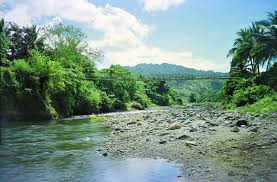
Rivers are an important part of Adams’ landscape. Museo Ilocos Norte describes the Bulu River as originating in Adams and flowing through the town before continuing towards Pagudpud. Hanging bridges also feature in descriptions of the area, and the provincial tourism website includes Adams Hanging Bridge among its listed attractions.
Ask which bridges are currently open to visitors and follow any instructions on their use. A permitted crossing can provide an enjoyable perspective on the river and surrounding vegetation. Give residents space to pass, particularly where a bridge serves everyday travel, and take photographs from a position that leaves the crossing clear.
Travelling to Adams Ilocos Norte
One way to reach Adams is by trekking and this starts from Barangay Panzian in Pagudpud. This is a 14 km, half-day and all uphill hike, that requires the crossing of streams crossing streams and rivers over suspension bridges.
Another way is by road that starts from the national road, and this is a 20-30 minute off-road motorcycle ride to reach the town. The most common local transport mode is the motorcycle. They are relatively fast and are great way to see the area’s natural beauty, even if the rocky road is a little bumpy. You can rent a motorcycle at a shed on the corner of the national highway and the Adams provincial road.
Drive on the National Highway towards Cagayan until you reach Barangay Pancian. Turn right as you when you come to the Adams sign right after Pannzian Beach. Follow this road until you reach Adams. It is highly recommended that you use 4x4 as its all uphill and a rough and rocky road.
Festivals in Adams
Tadek-bagat Festival (April 16-18): Presentation of the songs and dances of the different tribes in Adams.
Foundation Day of Adams (May 16): To commemorate the creation of Adams as a municipality. The OTOP (One Town One Product) called SAPLID is being highlighted during the celebration.
Products from Adams Ilocos Norte
All towns have some specialties and here it is Rattan craft and soft broom making. When you get to the village, you will get a warm welcome by very friendly people and flowers are often given to guests. You can get homestay accommodation in quaint rooms furnished with classic hand-crafted wooden furniture. Stay at Ilyn’s Homey Place. Saplid is the local name of soft broom made from the tiger grass locally grown. Harvesting time of tiger grass is from February, March, April and May. The tiger grass flower is sun dried for 3 days and are stocked for months. Soft broom making is done at night when they retired from work or during rainy days when they are confined at home.
Tourism in Adams Ilocos Norte
Adams adds mountain scenery, waterfalls, rivers and local flavours to a Pagudpud holiday. Visit Anuplig Falls and the many other falls, enquire about viewpoints and hanging bridges, and discover the town’s wine and cacao products. A planned day trip or overnight stay gives you time to appreciate this inland corner of Ilocos Norte. Adams Ilocos Norte for all you need to know.