Badoc Ilocos Norte
Badoc Ilocos Norte combines Philippine history, religious heritage and coastal attractions in the southern part of the province. It is the birthplace of painter Juan Luna and home to the museum dedicated to Juan and Antonio Luna. The town also contains the Minor Basilica of Saint John the Baptist, where La Virgen Milagrosa de Badoc is enshrined. Along the coast, La Virgen Milagrosa Cove and Badoc Island add another dimension to a visit.
For travellers heading north from Vigan towards Laoag and Pagudpud, Badoc provides an opportunity to explore the province before reaching its larger towns and cities. The museum and basilica form the core of a heritage visit, while the mainland coast and an island excursion require additional time. Badoc Ilocos Norte suits visitors interested in art, architecture and local religious traditions, with enough variety to combine historical sightseeing and time beside the sea
Museo nina Juan at
Antonio Luna
Museo nina Juan at Antonio Luna, also known as the Juan Luna Shrine, is one of Badoc’s principal attractions. The museum occupies the reconstructed Luna family house and commemorates the birthplace of Juan Luna, born on 24 October 1857. The two-storey building uses brick and timber construction associated with traditional Philippine houses. Its domestic setting gives visitors a way to connect the historical figures with their family background, rather than encountering them solely through paintings, monuments or accounts of military campaigns. The museum introduces the lives of the Luna brothers and their different contributions to Philippine history. Juan became an internationally recognised painter, while Antonio pursued scientific studies before becoming a general during the Philippine-American War.
Displays include reproductions of Juan Luna’s paintings, including Spoliarium and El Pacto de Sangre, alongside material connected with his life. These reproductions allow visitors to examine the subjects and compositions associated with his career. The original Spoliarium is in the National Museum of Fine Arts in Manila. The house itself also deserves attention. Its arrangement, materials and furnishings provide context for domestic life during the period, making the museum relevant to visitors interested in architecture as well as the Luna family.
Juan Luna and
Badoc
Juan Luna’s association with Badoc gives the town a place in the history of Philippine art. His career took him from the Philippines to Europe, where he studied and worked among artists and Filipino reformists. His painting Spoliarium won a gold medal at the 1884 Exposición Nacional de Bellas Artes in Madrid. The achievement became an important source of pride for Filipinos at a time when the country remained under Spanish colonial rule.
Visiting the museum adds a geographical starting point to that wider story. Badoc was the town of his birth, while his later education, artistic work and political associations extended far beyond Ilocos Norte. His connection with the town also continues at the nearby church, where he was baptised.
Badoc Basilica
The Minor Basilica of Saint John the Baptist, commonly called Badoc Basilica, is the town’s principal religious landmark. It is dedicated to Saint John the Baptist and is particularly known as the shrine of La Virgen Milagrosa de Badoc, patroness of Ilocos Norte. The parish became independent in 1714, following its earlier association with Sinait. The church and convent were constructed using stone and brick under Augustinian supervision. Their substantial masonry places them within the wider architectural tradition of colonial churches in the Ilocos region.
Juan Luna was baptised here on 27 October 1857, creating a direct connection between the basilica and the nearby museum. The church received minor basilica status through a decree issued in 2018, with its solemn proclamation held in February 2019. For visitors, the building offers both architectural interest and an introduction to the religious devotion associated with Badoc.
La Virgen
Milagrosa de Badoc
The image of La Virgen Milagrosa is central to the town’s religious identity. Local tradition recounts that fishermen recovered the image from the sea in 1620, together with an image of the crucified Christ. The Virgin became associated with Badoc, while the image of Christ became associated with neighbouring Sinait in Ilocos Sur. This shared tradition connects the two towns across the provincial boundary. La Virgen Milagrosa remains an object of devotion, attracting pilgrims to the basilica. The image received a pontifical coronation on 31 May 2018. Religious celebrations and the La Virgen Milagrosa Festival express the continuing importance of this devotion within the community.
La Virgen
Milagrosa Cove and Chapel
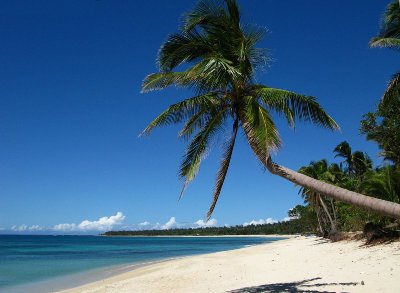
La Virgen Milagrosa Cove and Chapel connect the religious story with the coast where the images are traditionally believed to have arrived. The chapel provides a coastal counterpart to the shrine in the town centre. A visit here broadens an itinerary beyond the museum and basilica. The shoreline gives visitors views towards the sea and an opportunity to understand the coastal setting behind the local tradition. The cove is also associated with boat departures for Badoc Island. The chapel, mainland beach and island are separate parts of the coastal visit, so seeing the shoreline does not necessarily require making a boat crossing.
Badoc Island
Badoc Island lies offshore from Barangay Pagsanahan. Its beach, rocky shoreline and surrounding waters make it one of the municipality’s main natural attractions. A boat excursion offers a different experience from the heritage sites inland. Visitors come for the island setting, beach and opportunities for swimming and snorkelling when conditions permit. The surrounding waters contain coral and marine life, although visibility and access depend on sea conditions. Island visits require arrangements with local boat operators. The crossing is weather-dependent, and facilities are more limited than those at a developed mainland resort. Allowing additional time for the coastal excursion makes it easier to combine the island with the town’s historical attractions.
Planning a Visit
to Badoc Ilocos Norte
The Luna museum and Badoc Basilica make a practical starting point because both are in the town centre. Together, they introduce the artistic, family and religious history that distinguishes Badoc. The cove and chapel can follow as a separate coastal stop. Visitors planning an island trip should give that excursion its own allowance of time rather than treating it as a brief addition between museum visits. Badoc also fits into a wider route through southern Ilocos Norte, including Currimao, Paoay and Batac. This allows travellers to connect the Luna museum and basilica with other heritage buildings, museums and coastal destinations.
Badoc Ilocos Norte
Badoc Ilocos Norte offers a combination of attractions with clear connections to the town’s identity. The Luna museum introduces two figures in Philippine history, the basilica and coastal chapel explain the importance of La Virgen Milagrosa, and Badoc Island provides a separate outdoor excursion. Whether visited as a stop between Vigan and Laoag or as part of a longer provincial itinerary, Badoc rewards time spent exploring both its town centre and coast. Badoc Ilocos Norte for all you need to know.